The housing stock
What City bathrooms
tend to throw up.
The City has the smallest resident population of any London borough, and almost all of it lives in flats. That means the Barbican and Golden Lane estates, warehouse and office conversions around Smithfield and Aldgate, and newer apartment blocks. The constraints are the same ones that come with any managed block: concrete floors that cannot be chased, soil stacks shared with the flats above and below, managing agents who want notice and method statements, and service lifts booked in advance. The Barbican is listed, which puts windows, doors and anything visible from the podium outside what can simply be swapped.
- Concrete slabs, so waste runs are limited by what already exists
- Shared soil stacks and party structures in managed blocks
- Managing agent consent and notice periods before work starts
- Booked lift access and restricted delivery windows
- Listed building constraints on the Barbican and Golden Lane
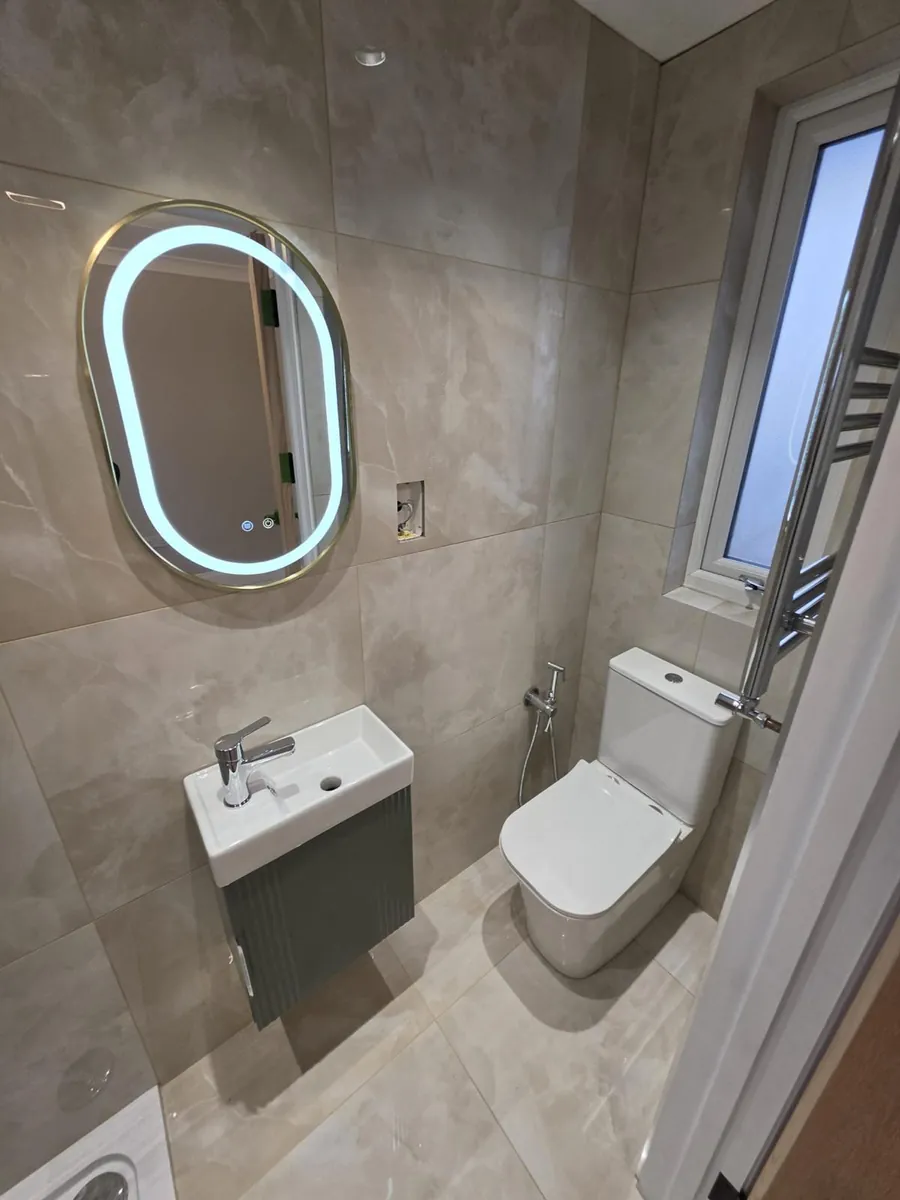
What we do in the City
Six rooms, six different jobs.
City of London
Questions we are
asked most.
Do you cover all of the City?
Yes, across EC1 to EC4. It is a small area and easy for us to get to, which helps when a job needs a second visit.
Can you work in a managed block?
Yes. Most City flats are in blocks with a managing agent. We will tell you at survey what consent is likely to be needed and what the agent will usually ask for.
Can the bathroom be moved to another wall?
Sometimes, but concrete floors make it harder than in a converted house. We will measure the existing waste and tell you honestly what is possible before you commit.